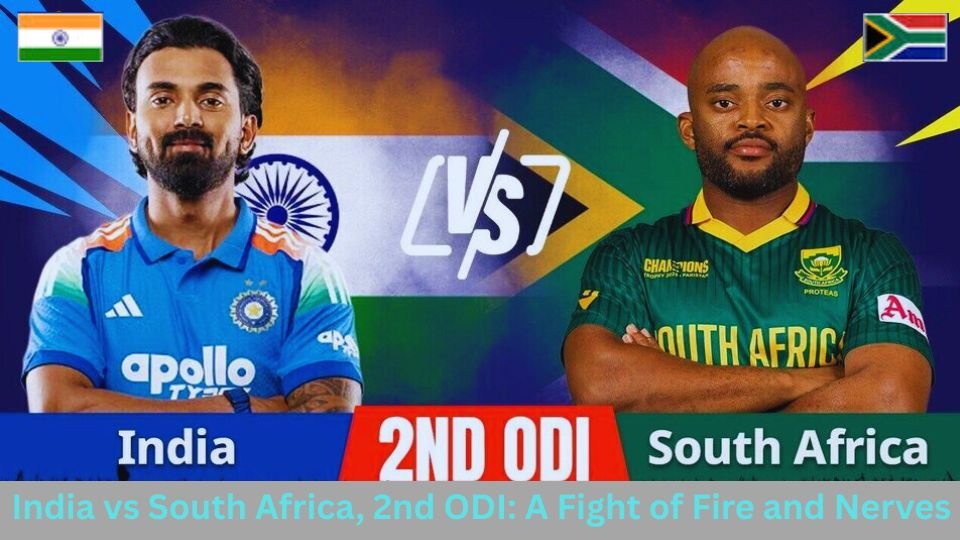
In the world of international cricket, few rivalries carry the layered intensity, emotional weight, and tactical complexity of an India vs South Africa ODI series. And on a warm afternoon under a sky streaked with clouds, the 2nd ODI of the bilateral series delivered everything cricket fans crave—suspense, emotion, tactical brilliance, individual heroism, collapses, comebacks, and a finish that held millions of hearts hostage until the final over.
The match was not merely a contest. It was theatre—one where bat met ball not just as equipment, but as characters in a high-pressure drama. The second ODI added another unforgettable chapter to a rivalry rich in historical duels, legendary performances, heartbreaks, and redemption arcs. It was a day when cricket breathed, roared, trembled, and exploded through every delivery.
The Build-Up: A Nation’s Expectations vs A Team’s Must-Win Hunger
Entering this match, the stakes were elevated for both sides.
The 1st ODI had swung in dramatic fashion—India clinching a tense victory that provided them the early momentum. South Africa entered the 2nd ODI not just looking for a win, but for a resurgence of confidence. Their fans demanded a fightback, their players demanded redemption, and their analysts demanded answers.
India, on the other hand, felt buoyed but cautious. They knew South Africa rarely stays down for long. A 2–0 series lead would not just be an advantage—it would establish dominance.
The stadium brimmed with tension long before the first ball. Flags waved, chants echoed, and every seat seemed filled with anticipation. Indian fans wanted consistency. South African supporters wanted revenge. Both wanted a spectacle.
They got one.
The Toss: A Decision That Set the Tone
South Africa won the toss and elected to bat first. The pitch looked full of runs early in the day—a gentle surface with subtle grass, promising bounce, and pace. But it also carried a faint dryness underneath, hinting that the spinners might come into play as sunlight settled intensely later in the afternoon.
The Indian captain didn’t seem disappointed. India’s fast bowlers love early movement, and their spinners relish controlling middle overs. It was a balanced decision—but one that would soon take on layers of importance as the innings unfolded.
South Africa’s Innings: A Tale of Power, Collapse, and Courage
The Openers Walk In: Intent on Turning the Narrative
Quinton de Kock and Reeza Hendricks opened for South Africa. Their body language spoke of determination—the kind that surfaces from the sting of defeat. The Indian fast bowlers, Jasprit Bumrah and Mohammed Siraj, already had the ball in hand, discussing fields with the captain. The tension felt like the moments before a storm.
Bumrah began with a length ball that seamed away sharply. De Kock left it, eyes focused, perhaps telling himself to settle in. Siraj followed at the other end with movement in the air. But in ODI cricket, one ball can change everything.
De Kock Fires Early
Unable to remain tentative for long, de Kock unleashed a string of boundaries—one flick, one cut, one drive—raw elegance, explosive timing. The Proteas dugout stood applauding. South Africa suddenly looked alive.
The First Blow: Siraj Strikes
Siraj delivered a ball that shaped in late and clipped Hendricks’ off stump. It was a delivery of beauty and brutality—perfect seam position, late movement, and clinical execution.
Hendricks departed, and the stadium tilted slightly toward India.
But this was only the beginning.
The Middle Order: A Story of Resistance and Ruin
Markram Joins the Fight
Aiden Markram walked in with calm shoulders and focused eyes—the Proteas’ anchor. He steadied the innings with controlled strokes, nudging Bumrah for singles, and punishing anything loose.
The partnership blossomed into 70 runs. South Africa seemed stable.
Kuldeep Yadav Spins Magic
Then came the twist.
Kuldeep’s first over was exploratory; his second was a warning; his third was destruction.
A deceptive wrong’un trapped Markram. The crowd roared. The next over, the left-arm wrist-spinner induced a leading edge from de Kock—caught at mid-wicket. In two overs, South Africa had lost their two best set batters.
The scoreboard now read 132/3.
And then the collapse came rapidly.
The Collapse: Pressure Becomes Chaos
Within the next 40 minutes:
- Klaasen mistimed a pull.
- Miller edged one behind.
- Phehlukwayo was beaten by drift and spin.
- Maharaj fell to a googly he didn’t read.
South Africa crumbled to 168/7.
Indian bowlers felt the momentum. The crowd sensed blood. Commentators smelled a low total.
But South Africa refused to go quietly.
The Lower-Order Fightback: Jansen’s Counterpunch
Just when it seemed the innings would end in embarrassment, Marco Jansen arrived with fire in his eyes and freedom in his swing.
Jansen turned the match from despair to defiance. His towering frame, long reach, and clean hitting suddenly transformed the script. He targeted the shorter boundary, launching two massive sixes off Shardul Thakur and then another off Axar Patel.
His 58 off 39 balls changed the energy completely. South Africa soared past 230, then 250, then 270.
The Proteas ended at 278/9—a competitive total but not unreachable.
India’s Chase: A Narrative Divided Into Three Acts
The Top-Order Storm
India’s chase started with Rohit Sharma and Shubman Gill. Both looked comfortable. Rohit cut Rabada for four. Gill drove Ngidi with graceful precision.
But Rabada is Rabada because he breaks partnerships when they matter most.
A sharp bouncer dismissed Rohit.
Gill fell soon after to a clever slower ball.
India slipped to 44/2, and suddenly the chase felt heavier.
Kohli’s Masterclass and Iyer’s Fight
Virat Kohli walked out to the familiar echo of a roar that felt almost spiritual. Every fan in the stands, every child watching at home, every critic, every former cricketer—everyone leaned forward.
Kohli began cautiously. South Africa bowled with discipline. Ngidi and Rabada attacked the corridor. Maharaj built pressure. But Kohli survived every trap.
Soon his wrists loosened. His timing sharpened. And then came the Kohli surge—singles, doubles, placements, punches, drives.
Shreyas Iyer joined him, matching intensity with calm. Together, they stitched a partnership that resurrected India’s chances.
The scoreboard ticked steadily:
- 90/2
- 120/2
- 150/2
- 178/2
The chase was back on track.
But cricket rarely tells a simple story.
The Collapse and the Final Twist
Just when India looked dominant, Shreyas Iyer perished to an inside edge. South Africa clawed back. Suryakumar Yadav walked in, hit a boundary, then fell trying to sweep Maharaj.
Kohli stood alone as wickets tumbled:
- KL Rahul misjudged a slower ball.
- Jadeja lofted one into the deep.
- Axar Patel was beaten by extra bounce.
India slid from 178/2 to 228/7.
The match flipped.
Kohli, now in his 80s, looked toward the dressing room. He knew the chase was now his burden alone.
The Final Overs: A Battle of Heartbeats India vs South Africa
India needed 51 runs off 40 balls with three wickets remaining.
South Africa sensed victory.
India sensed opportunity.
Kohli held his composure. He farmed the strike, used soft hands, played late cuts, punched straight drives, and guided India toward the target.
But Rabada returned for his final spell—this was the confrontation the match deserved.
Over 46
Rabada bowled a yorker that would have rattled anyone. Kohli somehow squeezed it for two.
India needed 32 off 24.
Over 47: Jansen’s Redemption
Jansen bowled a dreamy over:
- a dot
- a single
- a brilliant slower ball
- a yorker
He conceded just 4 runs.
India now needed 28 off 18.
Over 48: The Turning Point
Kohli hit a four through mid-wicket—pure class.
Then a misfield gave two extra.
Another single.
India needed 15 off 12.
Over 49: Drama Explodes
Rabada bowled a wide.
Then a dot.
Then Kohli’s mistimed shot almost carried to mid-on.
He survived.
But on the fourth delivery, Rabada produced a length ball that held its line. Kohli tried to glide it but edged it behind.
KOHLI OUT FOR 97.
The stadium fell silent.
India still needed 12 off 8.
The Last Over: A Finish Written for the Ages
India needed 7 runs from 6 balls.
Two wickets in hand.
Tension thicker than air.
Shardul Thakur on strike. Ngidi running in.
Ball 1:
Short ball, pulled for two.
5 needed off 5.
Ball 2:
Full delivery, drilled down the ground—saved brilliantly.
Single taken.
4 needed off 4.
Ball 3:
Kuldeep swings and misses.
4 needed off 3.
Ball 4:
A simple push through covers—misfield—TWO RUNS.
2 needed off 2.
Ball 5:
Ngidi bowls wide of off.
Thakur swings.
Edge.
FLIES over point…
LANDS SAFE.
They take two.
INDIA WIN.
The stadium erupts like a thunderclap. India take a 2–0 unassailable lead.
The Aftermath: Emotion, Relief, Lessons, and Legacy
India’s Dressing Room: Relief Meets Pride
The winning moment triggered scenes of raw emotion. Kohli, exhausted, smiled faintly. Rohit hugged Thakur. The dressing room applauded Kuldeep’s all-round impact. The victory was hard-earned—one of those wins that strengthens team culture.
South Africa’s Camp: Pain but Also Pride
Proteas players walked off with heavy hearts. Markram looked devastated. Rabada frustrated. But the fight they showed—the fight that almost resulted in a series-leveling victory—earned them respect.
Fans: A Roller-Coaster They’ll Never Forget
Around the world, fans felt everything—hope, fear, anger, exhilaration. Social media exploded in celebration and heartbreak. Cricket had done what it always does—connect millions through shared emotion.
What This Match Means for the Series
With India sealing the series, the narrative shifts:
For India:
- Their depth under pressure looks stronger.
- Kohli’s form is golden.
- Middle-order fragility remains a concern.
- Bowlers delivered when it mattered most.
For South Africa:
- Heartbreaking loss but a spirited performance.
- Jansen’s heroics were a revelation.
- Death bowling needs improvement.
- Their batting collapses continue to haunt them.
The 3rd ODI will still matter—South Africa fighting for pride, India fighting for a whitewash.
Conclusion: A Match That Will Live in Memory
The 2nd ODI between India and South Africa was more than cricket. It was a festival of emotions, a lesson in pressure management, and a showcase of world-class talent rising and falling across 100 overs of pure drama.
It gave fans:
- unforgettable moments,
- a legendary Kohli innings,
- a Jansen counterattack,
- a Rabada masterclass,
- and a nail-biting finish.
This match will live in highlight reels, discussions, arguments, and nostalgia for years.
More news :- Zubeen Garg’s Death in Scuba Diving Accident: The Silence of Assam’s Voice on 2025
https://brackingnews.com/2025/09/19/zubeen-gargs-death-in-a-scuba-diving-accident/